
Providing a factual overview of the Sectional Title Schemes Management Act (STSMA) and its application in South African community schemes. Our summaries focus on statutory requirements and management rules without financial advice or personal opinion.
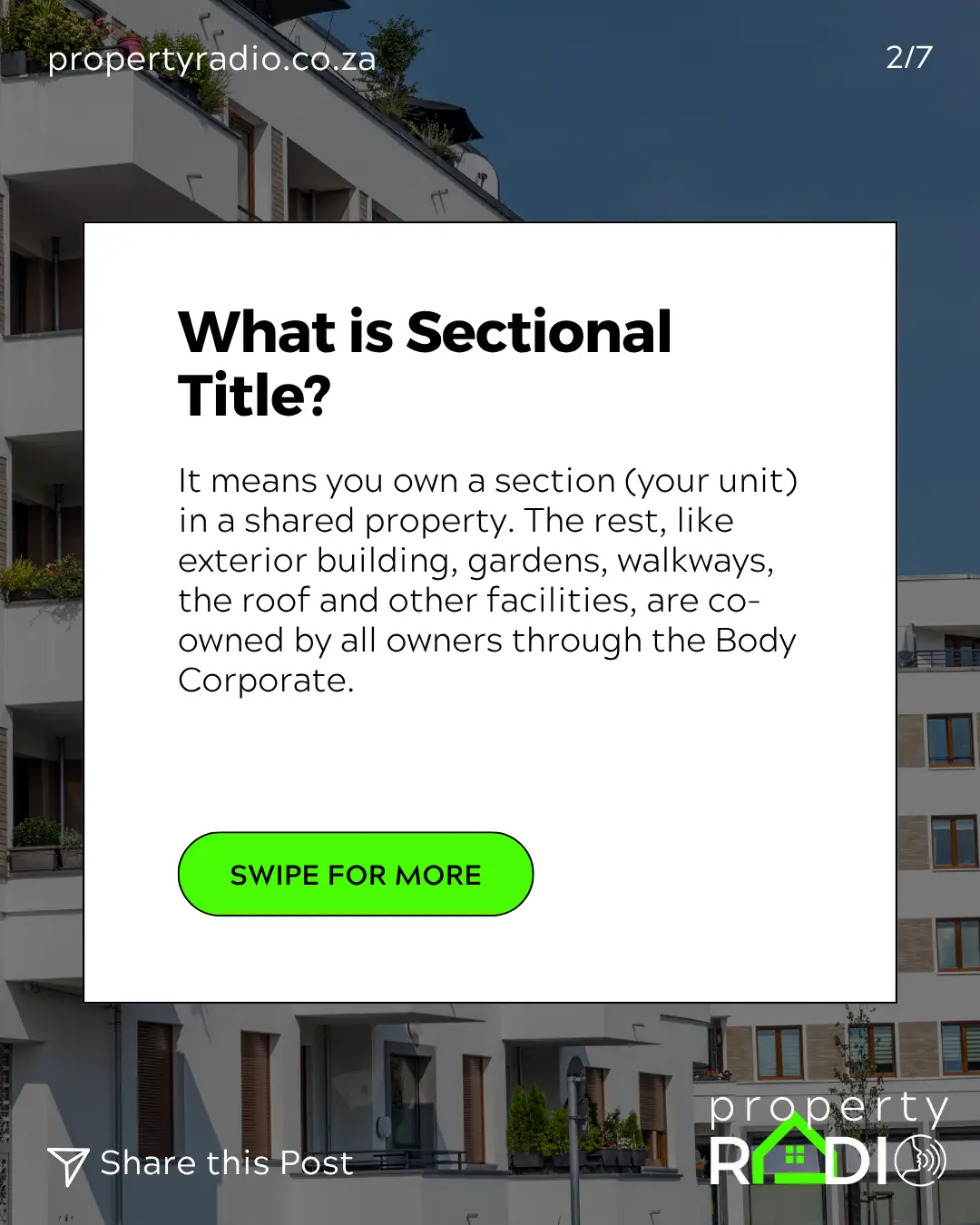
Sectional title management is the day-to-day and strategic administration of a sectional title scheme (complex, estate, or block of flats) on behalf of the Body Corporate.
This guide is designed to:
Train Trustees to lawfully and confidently manage a sectional title scheme
Help Owners understand how the Body Corporate operates and what to expect
Reduce disputes through clarity, transparency, and compliance
This guide applies to South African sectional title schemes governed by the Sectional Titles Schemes Management Act 8 of 2011 (STSMA).
Sectional Titles Schemes Management Act 8 of 2011 (STSMA)
Prescribed Management Rules (PMRs) and Conduct Rules
Community Schemes Ombud Service Act (CSOS Act)
Trustees and owners are legally bound by these laws and by the scheme’s registered rules.
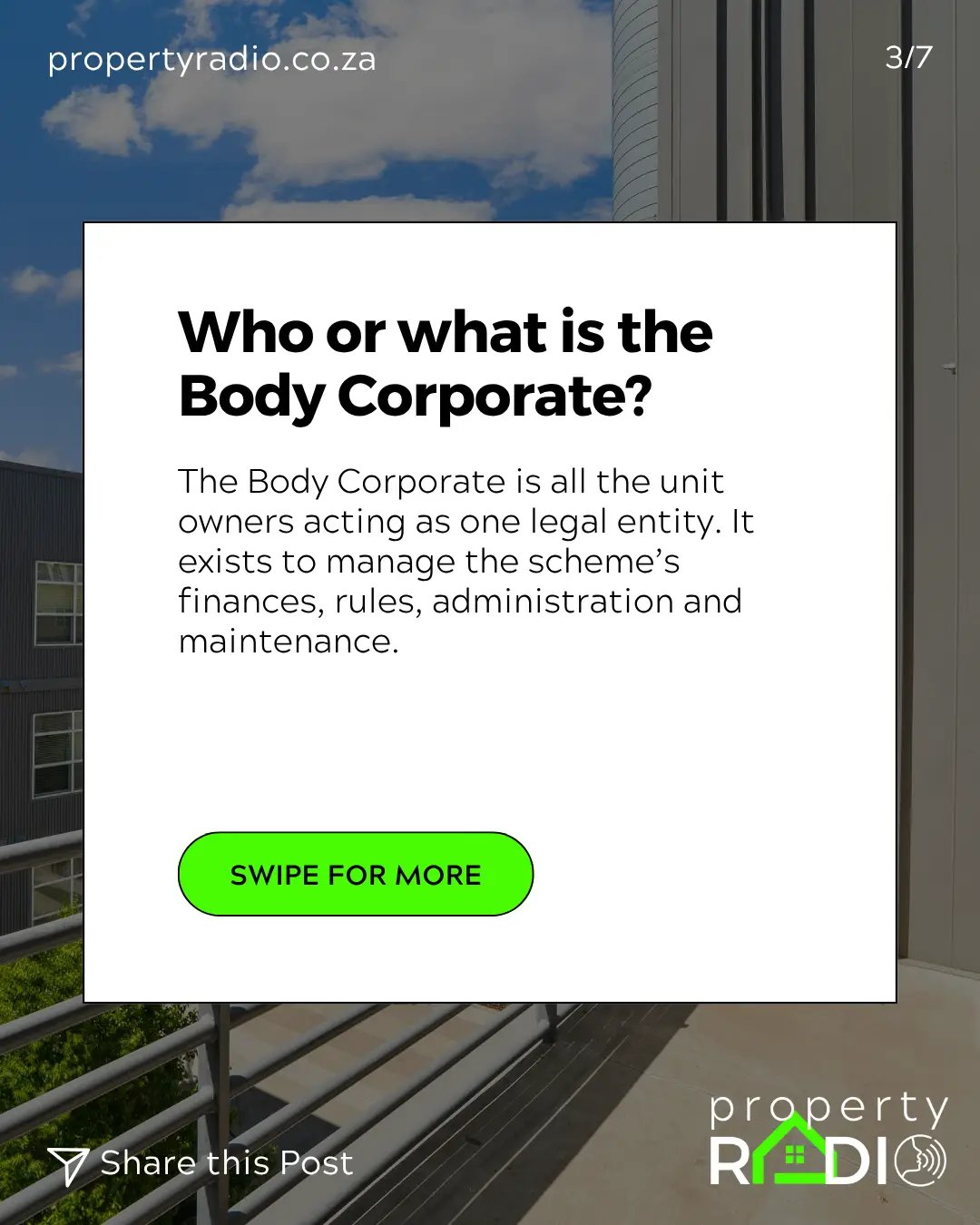
The Body Corporate comes into existence automatically when the first unit is transferred (STSMA section 2).
Under STSMA section 3, the Body Corporate must:
Control, manage, and administer the common property
Establish administrative and reserve funds
Maintain and repair common property
Insure the buildings to full replacement value
Enforce the scheme’s rules
Trustees are owners or representatives elected at the AGM to manage the scheme on behalf of the Body Corporate.
Trustees act collectively, not individually
Decisions must be made by proper resolution
Authority flows from STSMA section 7 and the PMRs
Trustees must:
Act honestly and in good faith
Avoid conflicts of interest
Act in the best interests of the Body Corporate
Trustees can be personally liable for reckless, negligent, or unlawful decisions.
Owners have the right to:
Vote at general meetings
Inspect Body Corporate records
Receive financial statements
Enjoy peaceful use of their section and common property
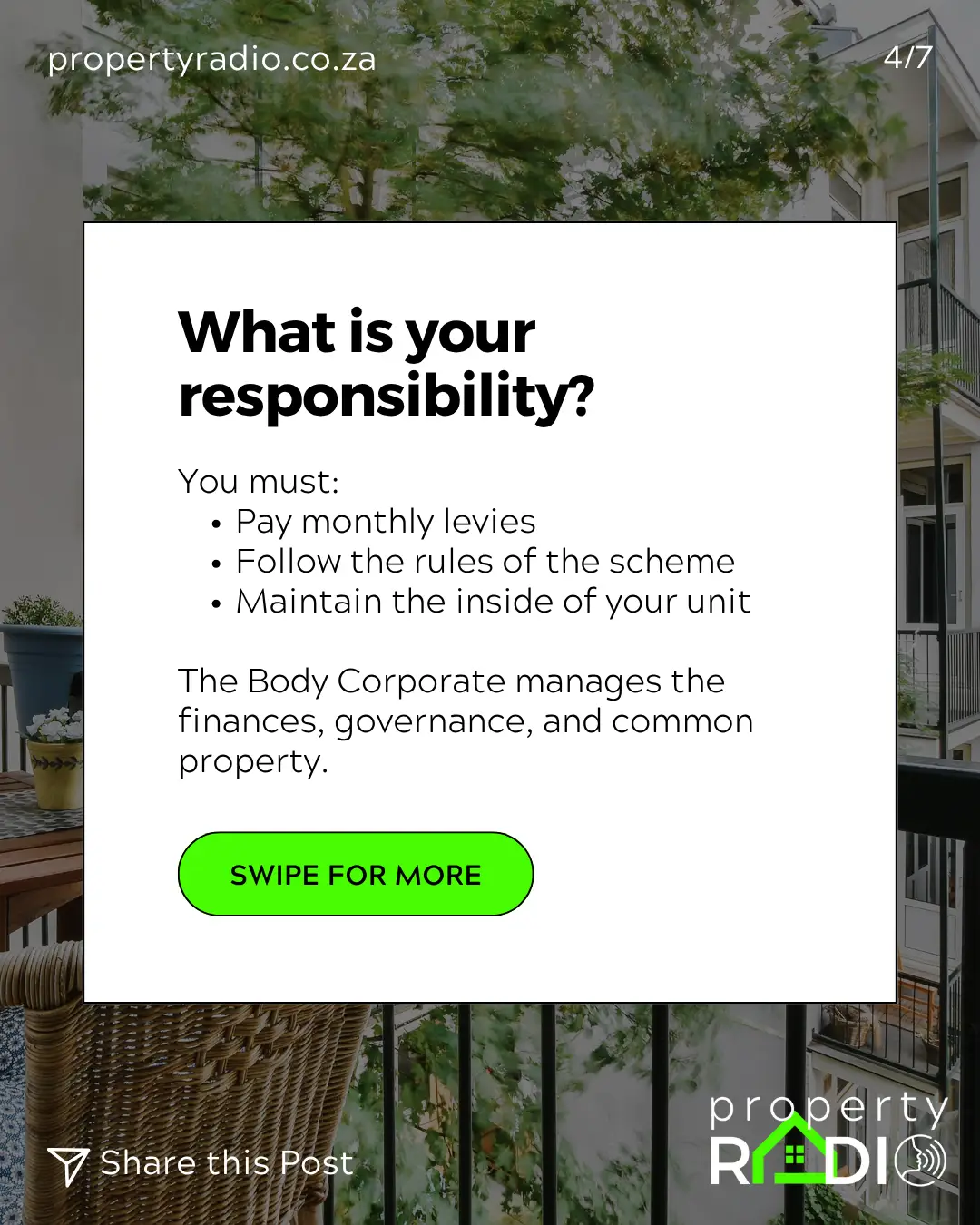
Owners must:
Pay levies on time (STSMA section 3(2))
Maintain their section
Comply with conduct rules
Not damage common property
The AGM must:
Be held once every financial year
Approve budgets and levies
Elect trustees
Appoint managing agents, auditors, and insurers
Handle operational decisions
Must be minuted
Require quorum and majority decisions
Called for urgent or specific matters
Can be requested by owners
Levies fund:
Day‑to‑day expenses (admin fund)
Long‑term maintenance (reserve fund)
Under STSMA section 3(1)(b):
Every scheme must have a reserve fund
Minimum contribution rules apply
Owners are entitled to:
Approved budgets
Annual financial statements
Levy schedules
Generally includes:
Roofs
Exterior walls
Foundations
Shared pipes and cables
Lifts, gates, and security systems
Generally includes:
Inside the section
Fixtures serving only one unit
Exclusive use areas (unless rules state otherwise)
Always check the scheme rules and plans before deciding responsibility.
Managing agents:
Carry out instructions from trustees
Handle administration and finances
Do not replace trustee decision‑making
Trustees remain legally responsible
Managing agents act under mandate
Rules regulate:
Noise
Pets
Parking
Use of common property
Written warnings
Fines (if allowed by rules)
CSOS dispute resolution if unresolved
Common disputes include:
Levy arrears
Maintenance responsibility
Trustee conduct
Rule enforcement
CSOS provides:
Conciliation
Adjudication orders
Affordable dispute resolution
✔ Read the rules annually ✔ Ask for clarity before conflict ✔ Keep communication professional ✔ Attend AGMs ✔ Understand the difference between opinion and law
A successful sectional title scheme requires:
Informed trustees
Engaged owners
Transparent management
Legal compliance
When trustees and owners understand their roles, conflict reduces and property values are protected.
This guide is educational and does not replace legal advice. For complex matters, consult a sectional title specialist or attorney.




For more information visit the website of CSOS right now.